
Did you know? Over 200 million protein structures are now mapped and freely available, a number that would have been unimaginable just a few years ago.
Before, solving the structure of a single protein could take months to years using labor-intensive methods like crystallography or cryo-EM. Some even dedicate their whole careers to figuring out how one protein folds.
But today, AI systems like AlphaFold can predict those same structures in minutes to hours with near-experimental accuracy.
From 1 to 200 million. Years to hours. Hours to minutes. Imagine that jump.
Here are more crazy AI breakthroughs and what it means to you as a physician. Let’s talk more about it!
Disclaimer: While these are general suggestions, it’s important to conduct thorough research and due diligence when selecting AI tools. We do not endorse or promote any specific AI tools mentioned here. This article is for educational and informational purposes only. It is not intended to provide legal, financial, or clinical advice. Always comply with HIPAA and institutional policies. For any decisions that impact patient care or finances, consult a qualified professional.
The 5 Crazy AI Breakthroughs
One of the most amazing things about AlphaFold is that what changed is not just speed but scale.
Biology has shifted from a slow, one-protein-at-a-time discipline into something that can be explored almost as quickly as data can be processed, opening the door to faster drug discovery, better disease understanding, and a fundamentally new way of approaching medicine.
This breakthrough is just the beginning. AlphaFold3, the latest version, can model interactions between proteins, DNA, RNA, and small molecules, further pushing the boundaries of what AI can achieve in biological sciences.
At the same time, research from Meta AI led to tools like ESM-2, which enabled the creation of entirely new proteins such as esmGFP. These advancements contributed to the 2024 Nobel Prize in Chemistry awarded to David Baker for computational protein design and Demis Hassabis and John Jumper for protein structure prediction.
For physicians, this directly impacts how diseases are understood, how drugs are developed, and how treatments are personalized. For the average person, it means faster development of therapies, more precise diagnostics, and a future where treatments can be tailored at a biological level. Biology is no longer only something we observe. It is becoming something we can systematically read and increasingly design.
And protein folding was only the beginning!
A broader wave of AI-driven breakthroughs is now reshaping both medicine and everyday life, often in ways that are not immediately visible.
1. AI-Designed Drugs
For much of history, drug discovery has been defined by trial and error, with thousands of compounds tested before a viable treatment emerges.
Today, companies like Insilico Medicine are using AI to design drugs such as INS018_055, which entered Phase II clinical trials. Similarly, Exscientia has developed AI-designed molecules that reached human testing significantly faster than traditional timelines.
AI models simulate how molecules bind to proteins and predict their effectiveness before lab testing begins. This reduces cost and time while increasing the likelihood of success.
For physicians, this means faster access to effective therapies and more targeted treatments. For the average person, it translates to shorter waiting times for new medicines and potentially lower costs as drug development becomes more efficient.
Real-world example: BenevolentAI used AI to identify BEN-34712, a promising ALS candidate, advancing to IND-enabling studies in months—a process that traditionally took years.
2. New Materials
AI is accelerating the discovery of new materials through projects like Google DeepMind’s GNoME system, which identified 2.2 million new stable crystal structures. These discoveries expand the pool of materials available for real-world use. Companies like IBM and Microsoft are also investing in AI-driven materials science to improve batteries, semiconductors, and industrial components.
In medicine, this leads to better implants, more efficient imaging machines, and improved medical devices. For everyday life, it means longer-lasting batteries, faster electronics, and more durable consumer products. Over time, these changes quietly reduce costs and improve quality of life.
Example: Researchers have used AI to design materials for more efficient solar cells, potentially reducing renewable energy costs.
3. Fusion Energy
Energy is a foundational layer of modern society, including healthcare. AI helps stabilize fusion reactions in projects like DeepMind’s plasma control for tokamaks and efforts supported by ITER research. Private companies such as Helion Energy leverage advanced computation and AI to accelerate reactor development, aiming for net electricity via Polaris.
If fusion becomes viable, it could provide a near-limitless source of clean energy. For healthcare systems, this means more reliable infrastructure and lower operational costs. For the average person, it could lead to cheaper electricity, a more stable power supply, and a reduced cost of living across multiple sectors.
4. AI as Scientific Partner
AI takes an active role in the scientific process. Systems from Google DeepMind generate hypotheses, design experiments, and analyze results iteratively.
For example, AI agents propose materials or molecular structures, test in simulations, and refine without full human intervention.
For physicians, this means medical knowledge evolves faster. For the average person, innovations arrive more quickly.
Example: DeepMind AI identified new cancer molecular targets, aiding drug development and personalized medicine.
5. Programmable Biology
With tools like CRISPR and AI-driven protein modeling, biology is becoming programmable. Companies such as Moderna leverage computational design in mRNA therapies, highlighted during COVID-19, using AI for sequence optimization.
AI-designed proteins like esmGFP show new biological structures can be created. This opens doors to engineered cells targeting cancer or repairing tissue.
For physicians, this shifts from managing disease to designing interventions. For the average person, it means personalized treatments and faster vaccines. Example: CRISPR-Cas9 therapies like Casgevy treat sickle cell anemia, FDA-approved after editing hematopoietic stem cells (not embryos).
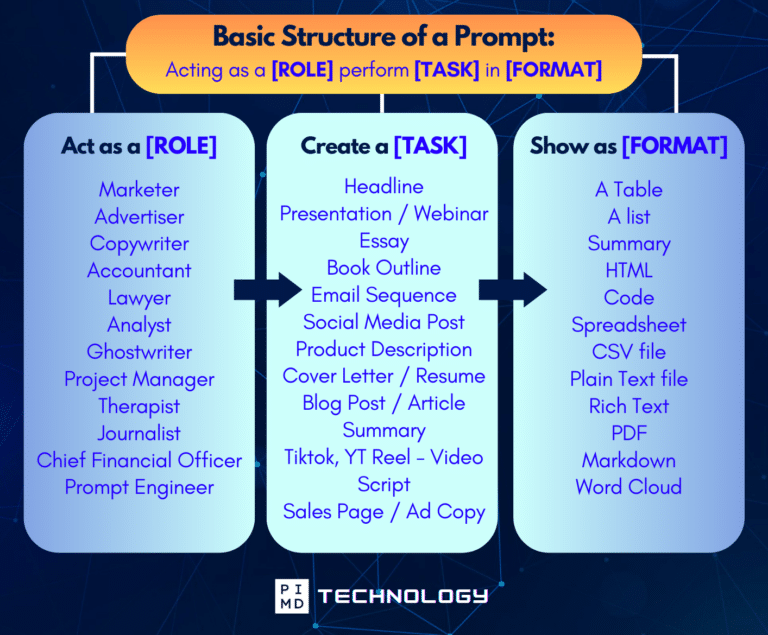
Unlock the Full Power of ChatGPT With This Copy-and-Paste Prompt Formula!
Download the Complete ChatGPT Cheat Sheet! Your go-to guide to writing better, faster prompts in seconds. Whether you’re crafting emails, social posts, or presentations, just follow the formula to get results instantly.
Save time. Get clarity. Create smarter.
Final Thoughts
AI is rapidly reshaping medicine and the world at large.
It would be an understatement to say it’s everywhere, from medicine to even our refrigerators (the talking one). So the idea is this, for physicians, the risk isn’t that AI will replace you (absolutely far from that), it’s missing out on the tools that are transforming healthcare and our lives in general.
The scale of change is enormous, the opportunities are vast, and it’s all changing so fast.
This is your chance to adapt, make use of it, and reclaim time and freedom. Understanding AI doesn’t require years of study. A basic grasp of these technologies can put you ahead of the curve, empowering you to work smarter, not harder.
Don’t wait to get on board; understanding AI now will position you to thrive in this new era of healthcare. Let us know what you think in the comments below!
Download The Physician’s Starter Guide to AI – a free, easy-to-digest resource that walks you through smart ways to integrate tools like ChatGPT into your professional and personal life. Whether you’re AI-curious or already experimenting, this guide will save you time, stress, and maybe even a little sanity.
Want more tips to sharpen your AI skills? Subscribe to our newsletter for exclusive insights and practical advice. You’ll also get access to our free AI resource page, packed with AI tools and tutorials to help you have more in life outside of medicine. Let’s make life easier, one prompt at a time. Make it happen!
Disclaimer: The information provided here is based on available public data and may not be entirely accurate or up-to-date. It’s recommended to contact the respective companies/individuals for detailed information on features, pricing, and availability. All screenshots are used under the principles of fair use for editorial, educational, or commentary purposes. All trademarks and copyrights belong to their respective owners.
If you want more content like this, make sure you subscribe to our newsletter to get updates on the latest trends for AI, tech, and so much more.
Further Reading

