
Have you seen those trending AI recreations of famous movie scenes and music videos?
They keep getting more realistic. You watch one, and a few seconds in you’re wondering what’s truly “real” nowadays.
That’s a deepfake, or close to it: video, images, or audio made with AI to look or sound like a real person doing or saying something they never did. And the old gut check doesn’t work anymore, because the AI keeps getting better.
A UCLA team went after that problem from an unusual angle. In a study published in eLight in September 2026, the researchers built a deepfake screener that lets light handle part of the work. In a lab test on a standard benchmark, it reached about 98% accuracy.
That’s a nice headline, but the details are more interesting.
Disclaimer: While these are general suggestions, it’s important to conduct thorough research and due diligence when selecting AI tools. We do not endorse or promote any specific AI tools mentioned here. This article is for educational and informational purposes only. It is not intended to provide legal, financial, or clinical advice. Always comply with HIPAA and institutional policies. For any decisions that impact patient care or finances, consult a qualified professional.
Why Deepfake Detection Is So Hard for People and Machines
You’re probably worse at spotting AI-generated images than you think.
The UCLA paper points to earlier research showing people correctly flagged AI-generated images only about 52 to 55 percent of the time, which is barely better than a coin flip.
That’s a big reason automated detectors are being built in the first place, but the strong ones have costs of their own. According to the paper, they often need hundreds of billions of calculations to check a single video, and they tend to work through videos one after another.
When a platform has a flood of uploads to screen, that gets slow and power-hungry. Detectors can also be fooled, since small, deliberate changes to a fake video can push a detector into calling it real.
How UCLA’s Light-Based Deepfake Detector Works
The team, led by Professor Aydogan Ozcan with Parnian Ghapandar Kashani and Shiqi Chen, built a hybrid of digital and optical parts. The setup is more straightforward than it sounds.
A small digital network first reduces each video to a compact set of features taken from face crops in sampled frames. Those features become a pattern shown on a programmable light modulator.
Laser light passes through the pattern and spreads as it travels, and sensors read how bright it is at paired spots. The difference in brightness gives each video a real-or-fake score. Because different regions of the pattern carry different videos, the system scores 15 videos in a single pass.
On 105 real and 105 fake videos held out from a standard face-swap benchmark called Celeb-DF, it reached 97.79% accuracy. It caught 99.86% of the fakes and correctly cleared 95.72% of the real videos, which means roughly 4 in 100 real videos were wrongly flagged.
That balance was intentional. The authors designed it as a first-stage screen that rarely misses a fake, accepts some false alarms, and passes flagged videos to a heavier digital check. They describe it as built for platform or data-center screening, not for running on your own devices.
How Accurate Is It on Face-Swap and AI-Generated Video?
A lot of detectors are trained on face-swap video, which carries telltale traces of the swapping software. Text-to-video models don’t leave those same traces, so the team generated fake videos with Google’s Veo 3 model and retrained the system lightly on 50 examples, under 1% of a full training pass.
On a held-out set of 105 real and 105 fake Veo 3 videos, accuracy was 94.80% in the lab setup, a little lower than on the face-swap set. On a harder face-swap set, where similar-looking people are matched before the swap, the team modeled adding two fixed optical layers. In simulation, accuracy rose from about 89% to about 96%, and since those layers are passive, the paper says they’d add little to power use.
Videos shared across platforms often get compressed, blurred, or noisy, and the paper tested for that too. The system stayed steady through mild and moderate degradation, which the authors say covers most real-world cases, but severe degradation hurt. Noise caused the largest drops, and heavy blur pulled accuracy down to around 65 percent in the best-performing optical setup.
In one set of attack tests, a query-based attack was run against 50 fake videos. At a subtle level of tampering, it fooled the light-based versions roughly 9 to 14 percent of the time, while the small all-digital detectors used for comparison were fooled every time. The authors argue that having part of the model in physical hardware makes it harder for an attacker to copy, but that was one attack method on one dataset, so it’s early evidence rather than a guarantee.
The energy numbers need the same care. They’re estimates built from the power ratings of off-the-shelf parts, not measurements from the bench. By that estimate, the light-based decoding step uses far less energy than an equally accurate digital decoder, but the digital front end still uses most of the power. In the paper’s main comparison, the savings for the whole pipeline came out to about 13 to 14 percent.
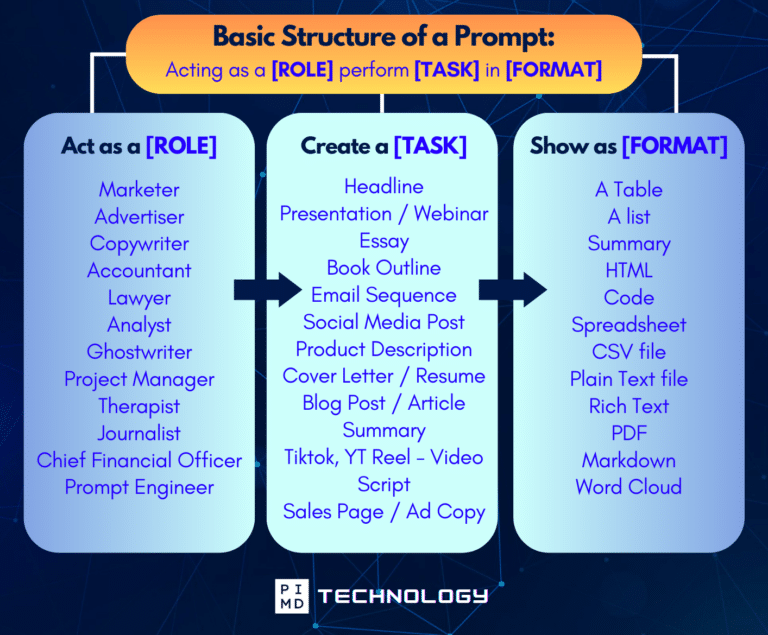
Unlock the Full Power of ChatGPT With This Copy-and-Paste Prompt Formula!
Download the Complete ChatGPT Cheat Sheet! Your go-to guide to writing better, faster prompts in seconds. Whether you’re crafting emails, social posts, or presentations, just follow the formula to get results instantly.
Save time. Get clarity. Create smarter.
What This Means for the Future of Deepfake Detection
Remember, this is a lab prototype. The headline results on face-swap and Veo 3 video come from a bench setup with a laser, a light modulator, and a camera, tested on benchmark video sets. Other findings, including the extra optical layers and the energy savings, come from computer models or component-based estimates, and the authors describe real-time, large-scale verification as something they envision for the future.
It’s still a good sign. Deepfake detection research is trying new hardware ideas instead of only building bigger software, and the early results held up across newer AI-generated video, compression, and attack attempts.
If your face shows up in online video, and for plenty of physicians and entrepreneurs it does, this is worth keeping an eye on. The authors frame it as a first filter with other checks behind it, and that’s a sensible way to read it.
So, just curious. Have you thought about what you’d do if a fake video of you showed up online? We’d love to hear it so share it in the comments!
Download The Physician’s Starter Guide to AI – a free, easy-to-digest resource that walks you through smart ways to integrate tools like ChatGPT into your professional and personal life. Whether you’re AI-curious or already experimenting, this guide will save you time, stress, and maybe even a little sanity.
Want more tips to sharpen your AI skills? Subscribe to our newsletter for exclusive insights and practical advice. You’ll also get access to our free AI resource page, packed with AI tools and tutorials to help you have more in life outside of medicine. Let’s make life easier, one prompt at a time. Make it happen!
Disclaimer: This article is for general informational and educational purposes only. It does not constitute medical, legal, compliance, or professional advice. The information provided here is based on available public data and may not be entirely accurate or up-to-date. It’s recommended to contact the respective companies/individuals for detailed information on features, pricing, and availability. All screenshots, if any, are used under the principles of fair use for editorial, educational, or commentary purposes. All trademarks and copyrights belong to their respective owners.
If you want more content like this, make sure you subscribe to our newsletter to get updates on the latest trends for AI, tech, and so much more.
Further Reading

