
Two AI agents now offer to run your busywork, and they are built for very different people.
Meta launched Muse on September 8, 2026, and xAI launched Grok Bot in beta on August 11. Both work in the background, connect to your apps, and check with you before doing anything big. This guide compares them in plain words, so you can tell which one fits the way you work.
If you’re a physician on the fence about which AI agent to work with, this is written for you. Let’s talk more about it.
Disclaimer: While these are general suggestions, it’s important to conduct thorough research and due diligence when selecting AI tools. We do not endorse or promote any specific AI tools mentioned here. This article is for educational and informational purposes only. It is not intended to provide legal, financial, or clinical advice. Always comply with HIPAA and institutional policies. For any decisions that impact patient care or finances, consult a qualified professional.
Muse AI vs. Grok Bot for Physicians
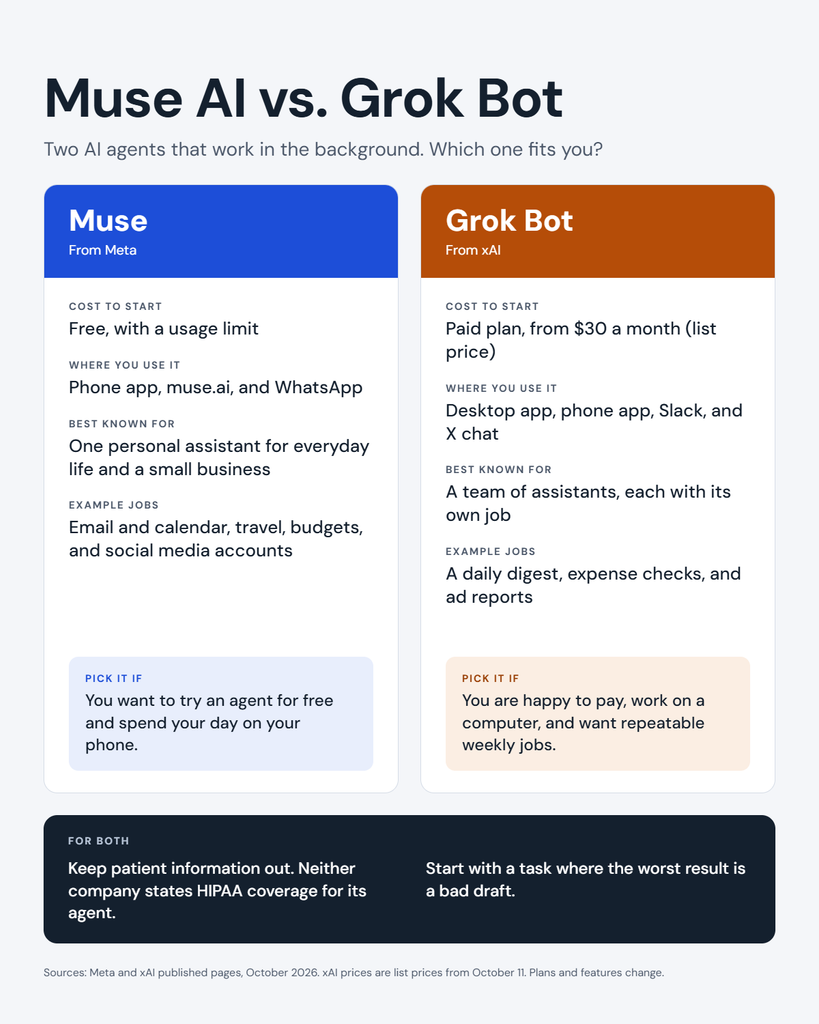
| Muse (Meta) | Grok Bot (xAI) | |
|---|---|---|
| Cost to start | Free, with a usage limit | Paid plan, from $30 a month (list price) |
| Where you use it | iPhone and Android app, muse.ai, WhatsApp | Desktop app, phone app, Slack, X chat |
| Best known for | One personal assistant for life and small business | A team of assistants, each with a job |
| Patient data (HIPAA) | No coverage stated | No coverage stated |
What they have in common
An AI agent is different from a regular chatbot. A chatbot answers a question and waits. An agent takes a job, works through the steps on its own computer in the cloud, and keeps going after you close the app. Both Muse and Grok Bot work this way. Both connect to tools like email, calendars, and accounting apps, and both are meant to ask before they send, buy, or delete anything.
Both companies also tell you to start small. Meta’s help pages suggest low-risk tasks first. xAI’s guides suggest starting with work where the Bot only prepares something for you to review.
Muse: one assistant for everyday life
Meta says anyone can use Muse with no technical skills, and that it is available in the US. You message it in the app, at muse.ai, or in WhatsApp.
It can handle email and calendar tasks, book travel, fill out forms, and track budgets.
Muse for Small Business adds connections to tools like QuickBooks, Slack, Zoom, Canva, and Shopify, plus your Facebook and Instagram business accounts.
Grok Bot: a team of assistants, each with a job
With Grok Bot, you create several named assistants, called Bots, and give each one a job.
xAI’s examples include a chief of staff that writes a daily digest of what needs your attention, an expense manager that matches receipts and flags missing information, and Bots for sales outreach and ad reports.
You can talk to your Bots in the desktop app on Mac, Windows, or Linux, in the phone app, in X chat, or in Slack, according to xAI’s docs. Bots can repeat a job on a schedule.
A feature called Teach a task lets a Bot learn from watching you do a browser workflow, though xAI says it is rolling out gradually. Grok Bot is built more for repeatable work and for teams than for personal errands.
Privacy and safety in plain words
Both agents get access to your accounts, so how each one protects them matters.
Meta says Muse runs on a private computer of its own, and a separate gatekeeper program must approve anything that leaves it. Meta says Muse cannot see your passwords or payment details, and an Activity log shows what it did. You can opt out of having your chats used for training. Meta’s research post adds that its staff are limited by policy but not blocked from seeing data when needed to run the service. A stricter version, Muse Confidential VM, is planned for later this year.
In October, security researchers found that pages shared from Muse could be located through public web records. Meta paused sharing, fixed the problem, and turned it back on October 22. Meta said it affected shared documents and images, not chats.
For Grok Bot, xAI’s security docs say all of your Bots share one cloud computer, along with its files and logins, so separate Bots are not a security wall. xAI’s FAQ says Grok Bot needs cloud storage, does not support Cursor’s Legacy Privacy Mode, and follows your Cursor account’s training settings. xAI also says Grok Bot picks the AI model for each task, which can include models from outside companies on a published list. If you share a Bot through a link, the link shows its setup, so remove secrets first.
On patient information, neither company says its agent is covered under HIPAA. None of the Muse pages reviewed mention HIPAA or a Business Associate Agreement, and xAI’s BAA request page is about its APIs. Keep patient information out of both, and check with your compliance team.
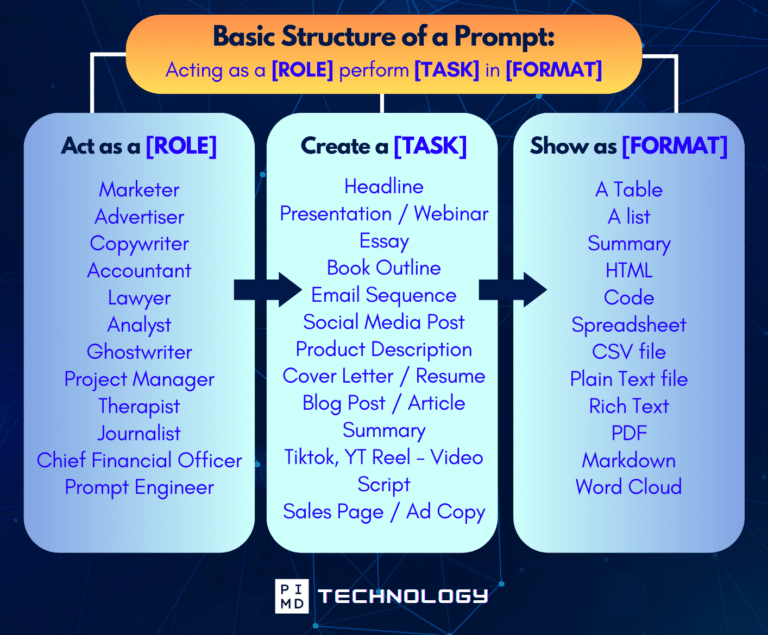
Unlock the Full Power of ChatGPT With This Copy-and-Paste Prompt Formula!
Download the Complete ChatGPT Cheat Sheet! Your go-to guide to writing better, faster prompts in seconds. Whether you’re crafting emails, social posts, or presentations, just follow the formula to get results instantly.
Save time. Get clarity. Create smarter.
Which one should you pick?
Muse fits if you want to try an agent without paying first and spend most of your day on your phone or in WhatsApp. It suits a physician who wants help with everyday errands and a small business or side venture, like email, calendar, travel, budgets, and social media accounts.
Grok Bot fits if you are comfortable paying, work mainly on a computer, and want separate assistants with separate jobs, such as one that prepares a daily digest and another that checks expenses. It also suits people who already pay for Cursor, SuperGrok, or a Premium-or-higher X Subscription plan, and an office or business with staff that wants team seats for business-side work.
Skip both for now if you would need them for patient information, or if you are not ready to review what an agent does before it acts.
A physician with a side business who wants to test the idea at no cost might start with Muse. A physician who owns a practice and wants repeatable weekly admin jobs, like expense checks or a daily digest, might look at Grok Bot’s team plans. Either way, start with a task where the worst result is a bad draft.
Bottom line
Muse is the easier and cheaper way to try an AI agent. Grok Bot costs more and asks more of you, but it is built for repeatable jobs and teams. Both are new, both can make mistakes, and both change often, so check the current plans and settings before you connect anything.
What do you think? Which AI agent are you willing to try this week? Let us know in the comments!
Download The Physician’s Starter Guide to AI – a free, easy-to-digest resource that walks you through smart ways to integrate tools like ChatGPT into your professional and personal life. Whether you’re AI-curious or already experimenting, this guide will save you time, stress, and maybe even a little sanity.
Want more tips to sharpen your AI skills? Subscribe to our newsletter for exclusive insights and practical advice. You’ll also get access to our free AI resource page, packed with AI tools and tutorials to help you have more in life outside of medicine. Let’s make life easier, one prompt at a time. Make it happen!
Disclaimer: This article is for general informational and educational purposes only. It does not constitute medical, legal, compliance, or professional advice. The information provided here is based on available public data and may not be entirely accurate or up-to-date. It’s recommended to contact the respective companies/individuals for detailed information on features, pricing, and availability. All screenshots, if any, are used under the principles of fair use for editorial, educational, or commentary purposes. All trademarks and copyrights belong to their respective owners.
If you want more content like this, make sure you subscribe to our newsletter to get updates on the latest trends for AI, tech, and so much more.
Further Reading

