
Workers who use AI regularly are saving an average of 2.2 hours a week, according to Federal Reserve Bank of St. Louis research on how people actually use these tools.
That’s not a projection or a sales pitch. It’s a measured average across real workers doing real jobs, and it’s a number worth sitting with if you’re a doctor who hasn’t found a use for AI yet.
Now, most doctors who haven’t built AI into their workflow yet aren’t skeptical because they distrust the technology. They’re skeptical because they’ve watched plenty of “game-changing” tools come and go, and they know hype and reality are usually two different things.
That skepticism is fair. Especially with all the crazy news around it.
But it’s worth a second look in 2026. The research behind AI and productivity has gotten rigorous enough to actually evaluate, and what it shows is specific, measured, and applies directly to anyone doing complex, high-stakes work under time pressure.
Sound familiar? That’s most of medicine. And it’s also the investor, entrepreneur, and content creator that a growing number of doctors are becoming on the side. Let’s talk more about it.
Disclaimer: While these are general suggestions, it’s important to conduct thorough research and due diligence when selecting AI tools. We do not endorse or promote any specific AI tools mentioned here. This article is for educational and informational purposes only. It is not intended to provide legal, financial, or clinical advice. Always comply with HIPAA and institutional policies. For any decisions that impact patient care or finances, consult a qualified professional.
The Study That Made This Serious
The best single piece of evidence on AI and professional performance comes from a collaboration between Harvard Business School and Boston Consulting Group, published in peer-reviewed form in Organization Science in March 2026.
Researchers ran a preregistered controlled experiment with 758 BCG consultants, roughly 7% of the firm’s individual contributor workforce. These were experienced knowledge workers doing complex, judgment-heavy tasks: ideation, strategic analysis, writing, persuasion.
The kind of work that doesn’t lend itself to easy automation.
For tasks within the AI’s capability range, consultants using AI worked over 25% faster, got quality ratings over 40% higher, and finished more than 12% more tasks.
The study also introduced something called the jagged technological frontier, which might be the most useful way to think honestly about AI right now.
The finding: AI can make a consultant sharper on one task and worse on the next, even when the two tasks look equally hard and sit side by side in the same project.
That nuance matters. The case for AI isn’t that it makes everything easier. It’s that it makes specific things dramatically easier, and whoever figures out which things first gets a real, compounding advantage over everyone still waiting on the sidelines.
What the Broader Data Shows
The Harvard and BCG study is arguably the most rigorous piece of evidence out there, but it’s not alone.
In October 2025, the Federal Reserve Bank of St. Louis published findings from its ongoing Real-Time Population Survey, conducted alongside researchers at Vanderbilt and Harvard. Among workers who used generative AI, average time savings hit 5.4% of work hours, roughly 2.2 hours in a standard 40-hour week.
The more often people used it, the more time they saved. A third of daily users reported saving at least four hours a week.
And that’s the average across everyone, including the casual, once-in-a-while users. For people who build a real, consistent habit with these tools, the payoff is bigger.
McKinsey’s research found that in 2023, only 30% of employees reported using AI at work. By 2025, that number hit 76%. This isn’t the early adopter phase anymore.
What started as an experiment for a handful of tech people has become standard practice across industries.
Where the Leverage Is Highest for Doctors
The gains from AI aren’t spread evenly. They’re concentrated in specific kinds of tasks, and knowing which ones matters a lot more than general enthusiasm about “AI” as a running trend.
Writing, documentation, and communication
This is where AI delivers the most consistent results across every profession.
A 2023 MIT-led study published in Science found that access to ChatGPT cut completion times on professional writing tasks by roughly 40% and raised independently rated quality scores by 18%. For doctors, the obvious application is clinical documentation.
Ambient scribes and AI-assisted note drafting have gone from novel to standard at a growing number of health systems. But the same tool works just as well for anything writing-heavy outside the clinic: investor updates, educational content, emails, grant applications, consulting deliverables.
Research and synthesis
Pulling from multiple sources, figuring out what’s relevant, summarizing what matters.
This eats more time than almost anything else in a complex decision, whether that decision is about a patient, an investment, or a business call. AI tools connected to verified databases compress that process significantly. It’s not just about speed. It’s about covering more ground before committing to a direction.
Ideation and problem solving
The BCG study found some of the strongest results here, in creative and strategic work. AI doesn’t replace judgment about which idea is best. It just hands you more options faster, so whoever’s making the final call is choosing from a stronger set of alternatives.
Administrative overhead
Scheduling, formatting, drafting templates, prepping materials for anything recurring. These tasks eat time without requiring the expertise that actually makes a doctor irreplaceable.
AI handles them competently and hands that time back.
The Part That Goes Beyond the Clinic
Here’s what usually gets left out of the productivity conversation: the benefits of AI don’t stay inside the job. They show up in every part of a busy person’s life.
A doctor evaluating a real estate syndication needs time to read the offering memorandum, check the sponsor’s track record, and understand how the deal is structured before writing a check. That kind of thinking takes cognitive energy that’s in short supply after a full clinical day. AI tools that speed up the research and drafting behind that due diligence give back both time and mental bandwidth.
A doctor building a side income stream, whether through consulting, a content platform, a course, or an education brand, is doing exactly the kind of work AI is well suited to support. Writing, research, email sequences, presentation prep. These are places where the time savings show up immediately and the quality gains are easy to measure.
A doctor managing an investment portfolio is tracking information across multiple positions and making decisions that require staying current. AI tools that summarize reports, flag relevant news, and organize financial information cut down the maintenance load without cutting the quality of oversight.
The common thread? Doctors building anything outside of clinical medicine run into the same wall everyone runs into: not enough time or mental bandwidth.
That’s exactly what AI gives back, in real, meaningful amounts, when it’s used with intention.
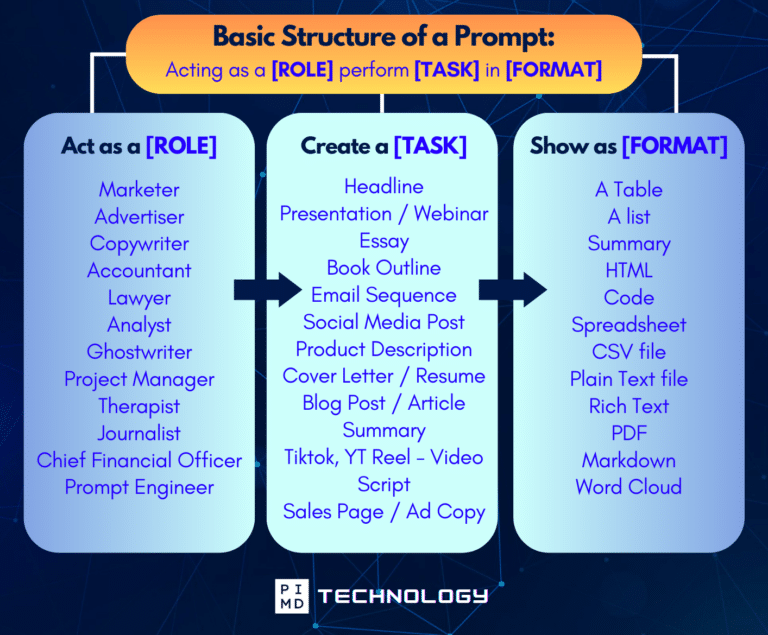
Unlock the Full Power of ChatGPT With This Copy-and-Paste Prompt Formula!
Download the Complete ChatGPT Cheat Sheet! Your go-to guide to writing better, faster prompts in seconds. Whether you’re crafting emails, social posts, or presentations, just follow the formula to get results instantly.
Save time. Get clarity. Create smarter.
Why Timing Matters
In 2023, only 30% of employees reported using AI at work, according to McKinsey. By 2025, that number reached 76%. The shift happened fast, and it hasn’t slowed down. Across professional services, the question has moved from whether to use AI to how to use it well.
For doctors, timing carries its own weight. Clinical medicine is demanding enough that finding room for anything outside of it is hard. AI tools that cut down documentation, inbox load, and administrative work create openings that didn’t exist before. Those openings are where the rest of a career, or a business, gets built.
There’s also a fluency argument worth sitting with. The people getting the most out of AI right now aren’t necessarily the most technically savvy in the room. They’re the ones who started early, made mistakes, figured out what actually works for their situation, and built habits around it. That process takes time, and it compounds. Starting now means being noticeably more capable in twelve months than someone who waited it out.
The research is more rigorous than it was two years ago. The tools are more capable. The use cases are clearer and better understood. The window to be an early mover hasn’t closed. But it’s narrowing.
A Practical Starting Point
The research keeps pointing to the same thing: AI works best on specific tasks with clear outputs. A reasonable starting point for any doctor without a regular AI habit is to find the one task in a typical week that eats the most time without requiring the skills that actually make them irreplaceable.
For most doctors, that’s documentation, email, or administrative overhead. All three are well-suited to AI help and carry low risk.
From there, it expands naturally. Research tasks. Summarization. Drafting for side projects. Prep work for investment decisions. Each new use builds familiarity and makes the next one faster to pick up.
The doctors who’ll look back on this period as a turning point aren’t the ones who mastered every tool on the market. They’re the ones who paid attention early, tried something small, and kept going.
That’s a pretty low bar. And the door’s still open. As with anything worth using, the smart approach is to start with healthy skepticism, verify what actually works, and never let enthusiasm outrun judgment. Due diligence applies here just like it does everywhere else.
So, what’s the one task eating your week right now that has nothing to do with why you became a doctor in the first place? Let us know in the comments.
Download The Physician’s Starter Guide to AI – a free, easy-to-digest resource that walks you through smart ways to integrate tools like ChatGPT into your professional and personal life. Whether you’re AI-curious or already experimenting, this guide will save you time, stress, and maybe even a little sanity.
Want more tips to sharpen your AI skills? Subscribe to our newsletter for exclusive insights and practical advice. You’ll also get access to our free AI resource page, packed with AI tools and tutorials to help you have more in life outside of medicine. Let’s make life easier, one prompt at a time. Make it happen!
Disclaimer: This article is for general informational and educational purposes only. It does not constitute medical, legal, compliance, or professional advice. The information provided here is based on available public data and may not be entirely accurate or up-to-date. It’s recommended to contact the respective companies/individuals for detailed information on features, pricing, and availability. All screenshots, if any, are used under the principles of fair use for editorial, educational, or commentary purposes. All trademarks and copyrights belong to their respective owners.
If you want more content like this, make sure you subscribe to our newsletter to get updates on the latest trends for AI, tech, and so much more.
Further Reading

