
Key Takeaways
- Yuhas’ pet-sitting business grew quickly thanks to word-of-mouth endorsements.
- She began hiring people she trusted to help her expand The Funny Sitter.
- Now, she averages $5,000 a month, with a significant spike during the holiday season.
This as-told-to story is based on a conversation with Stephanie Yuhas, an award-winning film and television writer and producer and founder of pet-sitting service The Funny Sitter. Income from her pet-sitting side hustle currently averages approximately $5,000 per month but can reach about $15,000 during the holiday season. The piece has been edited for length and clarity.
I am originally from the East Coast, New Jersey and Philly, and I actually never had pets before other than fish. My mom never let me. So never in a thousand years would I have thought I’d start a pet-sitting side hustle.
I came to LA because a show that I wrote sold to Amazon Studios and went into development, but then Amazon dissolved their kids and family division. The show resold to HBO Max. My producer moved on and brought me and the whole team with him to HBO Max. In the meantime, in the background, I was helping develop a series called Mystery Science Theater 3000, a reboot.
The pandemic and strikes shift the industry landscape
I had been doing that on the East Coast, but it broke the Kickstarter world record, and Netflix picked it up. I never expected that to happen. It was a total indie. Now, that’s not my show; I just worked on it. But things were really popping off. I won a mentorship at Netflix, where we were developing a feature. We thought we had it in the bag. Then Covid hit.
Already, there were some mergers happening in my entertainment industry, but with Covid, then the strikes, and ultimately leaving my marriage — where I basically lost everything and had to walk away from my home with nothing more than a teal suitcase — I was like, What do I do? I had to get my bearings.
Finding the first pet-sitting gig, growing with word-of-mouth
Through a Google listserv, I saw that someone needed a person to watch their pets. I’m like, That’s great. Because this was still the middle of the pandemic, so looking for apartments was really hard. It felt like the safer choice. At that point, I did it as more of a survival thing — I didn’t charge for the first job I ever did.
Then, through word-of-mouth, people were like, “This woman is actually really good.” As it turns out, a former homeowner who doesn’t smoke and is kind of sober curious was in-demand.
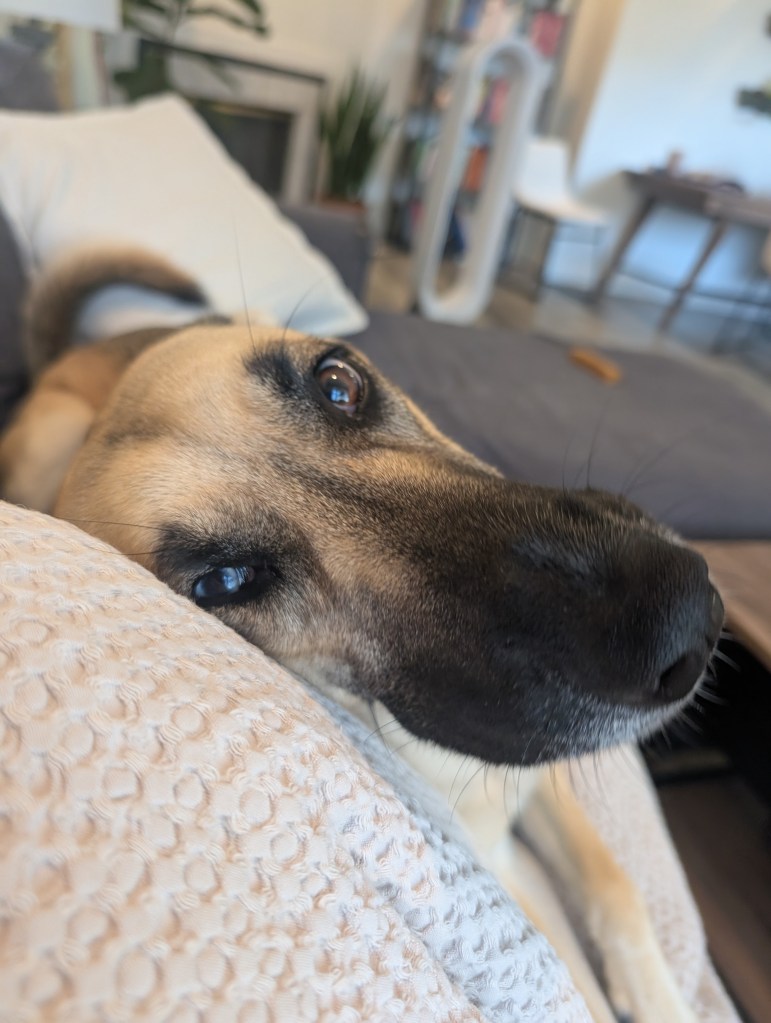
I didn’t know when production was going to start again, so I was transitioning to be an author. I was making all of my money ghostwriting books for other people. One thing led to another, and I just kept on booking and booking through word-of-mouth.
Then I got onto Rover. Because I have dyscalculia, it’s very difficult for me to do invoicing. When I’m in Hollywood, or even when I’m with the book clients, I have an agent who handles all that stuff. So I needed a third-party agency to handle the finances. Then I became one of the top pet-sitters on Rover.
People pay to put their animals at ease
Now that there’s been a return to office, I’m more popular than ever. If I’m going to do a sit requiring constant care, where I can’t leave the house, I charge a lot for that because I have to get Postmates, etc. People pay it because their animals often have severe separation anxiety and will get destructive. They know that I have a sort of calm, Disney-princess energy sometimes. I’m literally writing princess movies and things like that.
Someone told me early on that sometimes you can get paid more as a pet-sitter in Hollywood than Hollywood gets paid in Hollywood. I thought it was a joke, and then I looked at the financials. My pet-sitting income currently averages approximately $5,000 per month, although it can reach about $15,000 during the holiday season or when I take on unusual, high-demand bookings. The business is highly seasonal, with a significant dip between early January and early April.
When you average it out in terms of how many hours you spend writing books, making TV shows, being in development hell, dollar for dollar, you’re going to make more money pet-sitting sometimes, especially if you end up in the specialty that I have. I’ve managed mansions and estates. I’m not going to compete with a college student who just comes by to drop some kibble in the bowl.
Entering the circus, navigating extreme clients
Over time, I realized it’s not just about pet-sitting. My job is to enter your circus and be the ringleader. Other things come up, too; maybe someone needs a ride to the airport. So the income is stacking within the gig because I am taking over someone’s life for them, and I do charge extra for that. When there’s a lot of animals in the house, each animal gets charged additionally.
Especially in the Los Angeles market, I’ve had really extreme clients. I had a client who expected a medium-pressure cat massage every single time the cat ate. I was like, This cat has a better life than most people I know. Definitely most comedians.
And then I got popular enough that clients were overlapping dates. I can’t handle two houses at once. But my friends who are also in the entertainment industry, who have the exact same problems as me and very similar qualifications, were like, “Can I try?” So I started to expand The Funny Sitter family.
The exact same skills I used running like a full service production company translate to pet-sitting, and at the end of the day, this is all still service.
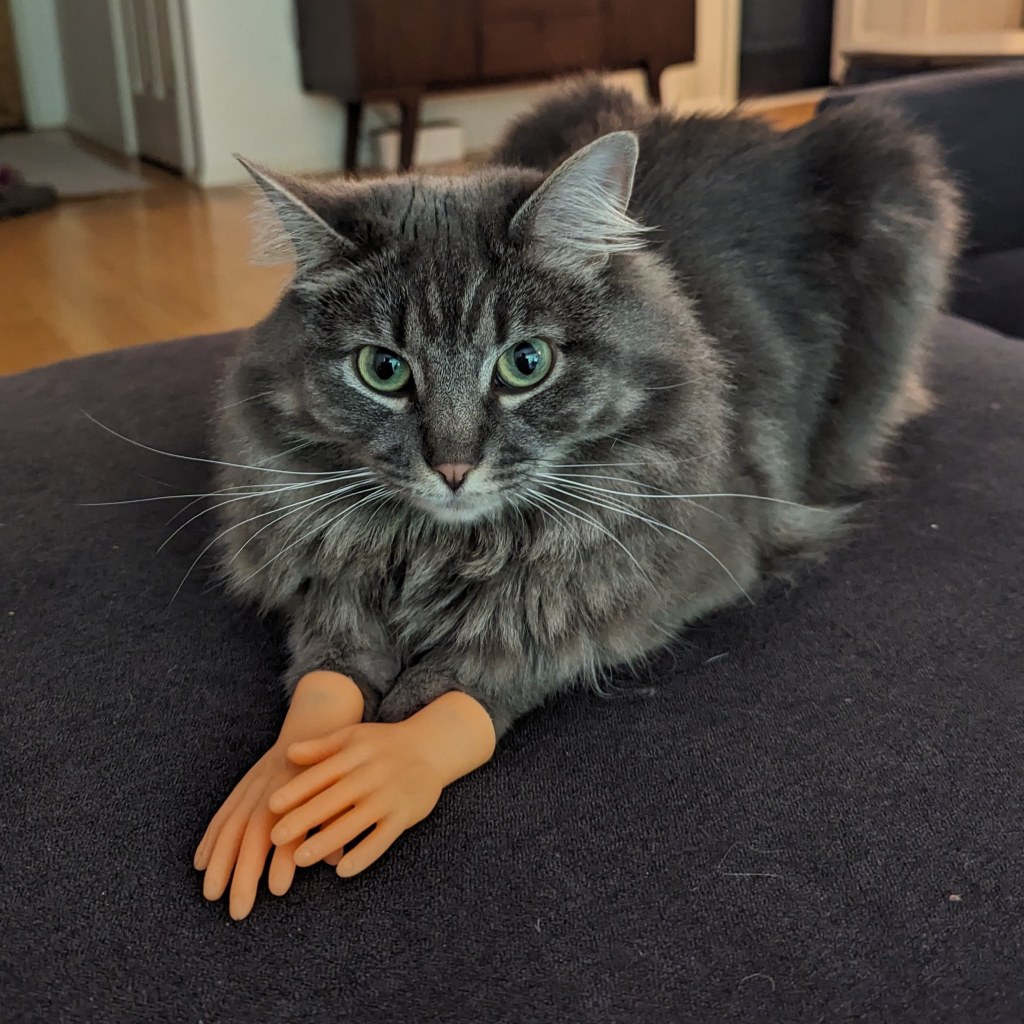
Embracing the side hustle and gig work amid industry upheaval
Initially, I actually hid the fact that I was pet-sitting because I was embarrassed. Our industry has such an awful “fake it till you make it” standard, and I worried that admitting I was doing gig work would make me look like I wasn’t a “real” creative anymore.
But when the world reopened and I started attending peer events again, including Women in Animation, I realized I was far from alone. Many of my peers had also turned to pet-sitting and other gig work to weather the pandemic, strikes, mergers and the upheaval in our industry. Those conversations were part of how I began understanding just how important the strikes were, and how strange it was that, in some cases, we could earn more and find more stability caring for other people’s animals than we could creating the work we were trained to do.
That changed how I thought about the stigma around gig work. I want to be very open about my “side hustle” because I think there is nothing inherently lesser about being a gig worker compared with having a conventional 9-to-5. During lockdown, gig workers, including Uber drivers, delivery workers and pet-sitters, were often the people keeping essential parts of life functioning while others couldn’t safely leave their homes. There is dignity in that work.
Unlocking more financial stability and creative independence
And, unexpectedly, the financial stability of pet-sitting has also helped me become more creatively independent. It has allowed me to step back from doing as much service work through my ghostwriting company and start writing my own books again for the first time in years. My publisher went under, many of the network executives I had worked with moved on, and we’re still navigating enormous disruptions from AI.
I’ve realized I can’t sit around waiting for the industry to “go back to normal.” My other company, Permission Slip, was founded because I was done waiting for permission from power players to create my art. While directly supporting art is more ideal, gig work is a good backup when that isn’t possible. I’m building my own intellectual property independently, without a development budget or advances, supported in part by my pet-sitting business and my backers on Patreon.
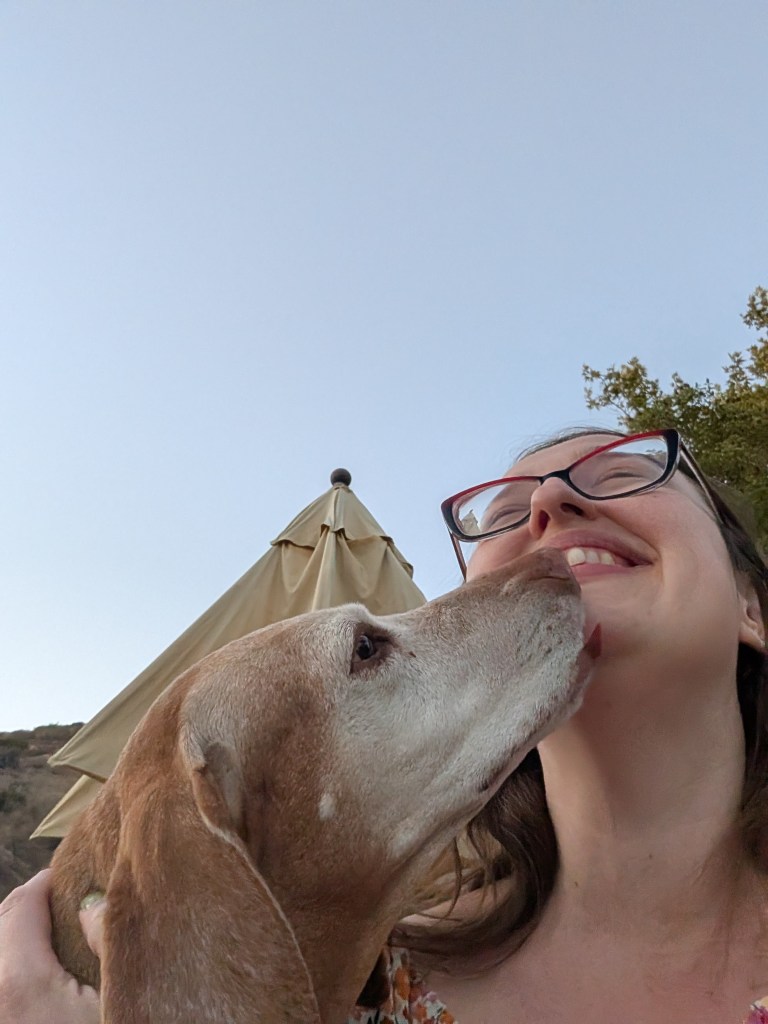
Life becomes material for art
In fact, life is becoming material for the art. I’m developing a series called Mars Rover, which asks: “What if the first man on Mars was actually man’s best friend?” The dog’s behavior in the story is based entirely on the behaviors of the beloved pets I’ve cared for. My clients are genuinely excited by the idea that their pets could inspire a character that might someday appear on television or in a book.
I don’t want the takeaway to be “Don’t pay artists; get them to watch your cats instead!” That would be completely contrary to what I believe. Arts and entertainment is a high-risk venture, and I honestly wish I didn’t need two jobs to pursue my creative ambitions.
But the steady work of pet-sitting saved me during one of the most difficult periods of my life. What I never expected was that it would do more than help me survive. It gave me enough stability to start building again, and now I feel like I’m actually thriving in both businesses.
Start small, build relationships and have fun
If you’re considering pet-sitting, start small. And don’t ever make a job for yourself that you don’t want. I’ve seen a lot of people who pet-sit to get free accommodations to travel, and they’re not into pets. It is wildly unethical, and it is not going to work out for you. This is a real job. If you treat it as such, people will treat you with respect, and everyone is going to have a good time.
Approach it sort of like dating; I say no to a ton of clients, which is really hard because sometimes people take it personally. But you have to come up with a list of questions upfront because you’re interviewing the person whose pet you’re sitting as much as they’re interviewing you.
But ultimately, have fun. The most rewarding part of this is that I get to have pets all over the world, and you bond with the animals. I was just flown to Hawaii for a sit, and I never thought that that would happen in a million years. But they’re like, “We don’t want anyone but you.” So if you are looking to love pets all over the world and build longevity and relationships, then approach it with intention and have a blast.
Key Takeaways
- Yuhas’ pet-sitting business grew quickly thanks to word-of-mouth endorsements.
- She began hiring people she trusted to help her expand The Funny Sitter.
- Now, she averages $5,000 a month, with a significant spike during the holiday season.
This as-told-to story is based on a conversation with Stephanie Yuhas, an award-winning film and television writer and producer and founder of pet-sitting service The Funny Sitter. Income from her pet-sitting side hustle currently averages approximately $5,000 per month but can reach about $15,000 during the holiday season. The piece has been edited for length and clarity.
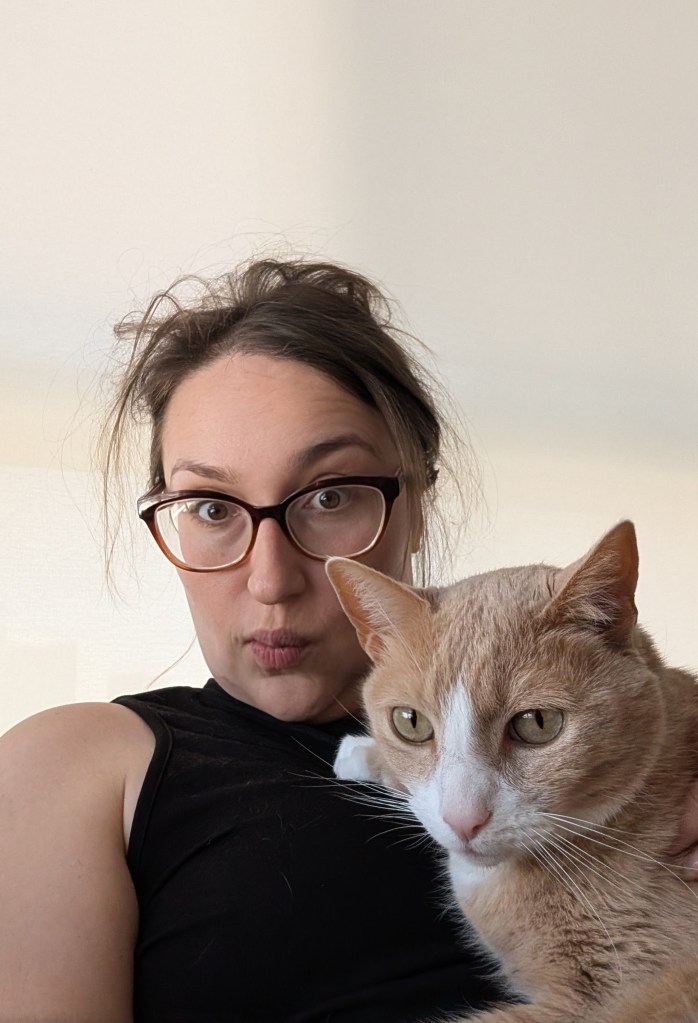
I am originally from the East Coast, New Jersey and Philly, and I actually never had pets before other than fish. My mom never let me. So never in a thousand years would I have thought I’d start a pet-sitting side hustle.
I came to LA because a show that I wrote sold to Amazon Studios and went into development, but then Amazon dissolved their kids and family division. The show resold to HBO Max. My producer moved on and brought me and the whole team with him to HBO Max. In the meantime, in the background, I was helping develop a series called Mystery Science Theater 3000, a reboot.

